1. Slow breathing
Breathe in gently through your nose and out for longer through your mouth, for five minutes or so. The NHS suggests breathing exercises as one way to unwind before bed. See breathing exercises for stress.
2. A body scan
Move your attention slowly from your feet to your head, letting each part feel heavier as you breathe out. Our body scan guide has the steps.
3. Progressive muscle relaxation
Tense and release each muscle group in turn. Many people find it helps if their body feels tight at bedtime. See progressive muscle relaxation.
4. A calm visualisation
Picture a calm place in detail. This gives your mind something peaceful to follow instead of tomorrow's worries. Try our guided visualisation.
5. A wind-down routine
The NHS suggests going to bed and getting up at similar times, avoiding screens for a while beforehand, and avoiding caffeine, alcohol and smoking in the hours before bed. A simple routine is in our evening wind-down guide.
How can you combine the techniques into a 15-minute plan?
Start with five minutes of slow breathing, move on to a short body scan or muscle relaxation, and finish with a calm visualisation. By the end you will often be drowsy. Do it in bed with the lights off, or on the edge of the bed first if you tend to nod off too early.
How should you set up your bedroom?
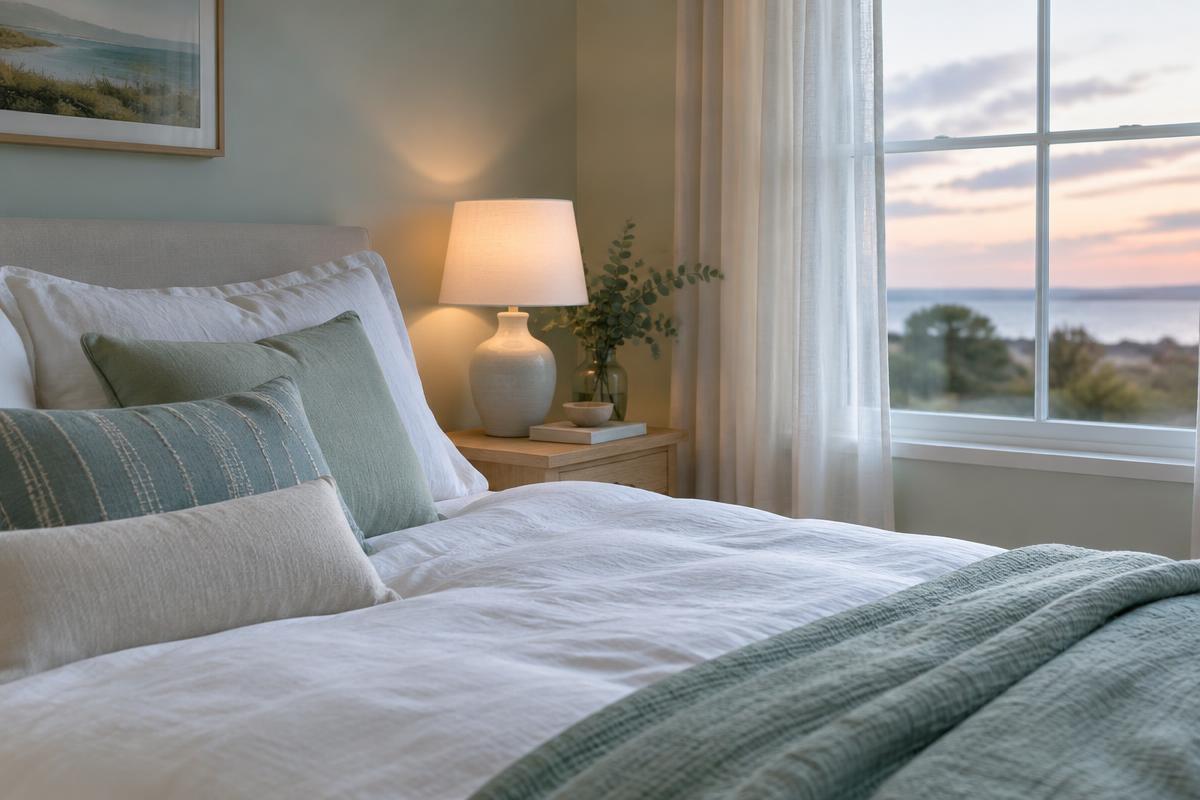
The NHS advises keeping your bedroom quiet, dark and not too hot or cold, and making sure your bed is comfortable. Earplugs, blackout curtains or an eye mask can help if noise or light disturbs you. Keep work and screens out of the bedroom if you can.
What should you avoid before bed?
The NHS advises not smoking, and not drinking alcohol, tea or coffee, for around six hours before bed, and avoiding vigorous exercise or a large meal late in the evening. Alcohol can help you drop off but tends to disturb sleep later in the night.
What if relaxation does not work straight away?
Relaxation is a skill, and it often takes a week or two of regular practice to feel the effect. If you are lying awake feeling frustrated, get up for a while and do something calm, then try again. See how to stop overthinking at night.
When should you see your GP?
If you have trouble sleeping for weeks, snore loudly, wake gasping or feel very tired in the day, speak to your GP. Sophrology for sleep is one method that combines several of these.
Common questions
Which relaxation technique is best for sleep?
There is no single best one. Try slow breathing or a body scan first, because they are simple, and stick with whichever feels natural.
What should I do if I cannot sleep?
The NHS suggests that if you are still awake after about twenty minutes you can get up, do something calm and return to bed when you feel sleepy.
Is it normal to wake in the night?
Waking briefly is common. If it is frequent or you cannot get back to sleep, speak to your GP.