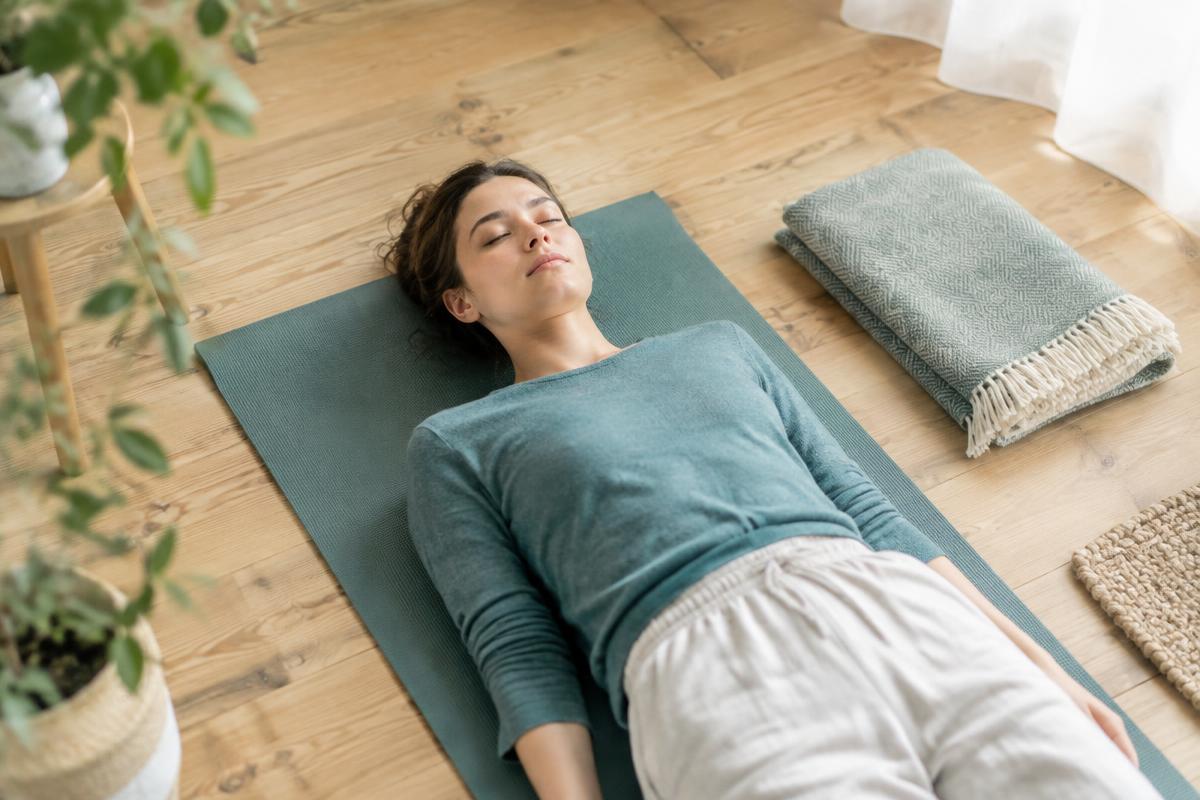
A ten-minute body scan
- 1
Lie down or sit comfortably and close your eyes if you like. Take three slow breaths.
- 2
Bring your attention to your feet. Notice any sensations: warmth, weight, tingling. Breathe out and let your feet soften.
- 3
Move up to your lower legs, then your knees and thighs, taking a breath at each stage.
- 4
Move to your hips and lower back, then your stomach and chest. Notice your breath moving in and out.
- 5
Move to your hands, arms and shoulders. Let your shoulders drop as you breathe out.
- 6
Move to your neck, jaw and face. Let your jaw loosen and your forehead smooth.
- 7
Rest for a few breaths, noticing your whole body, then open your eyes slowly.
What is a body scan?
A body scan is a relaxation and mindfulness exercise. You move your attention through your body, noticing warmth, weight, tingling or tension, and letting your muscles soften. It is used in many NHS relaxation scripts.
How do you do a body scan?
Use the step-by-step list near the top of this page. Do not worry if your mind wanders. Notice that it has, and gently bring your attention back to where you were.
How long should you do it for?
Ten minutes is a good start. Once you know it well, a shorter version of a minute or two can help during the day. Doing it in bed can help you wind down, as in our wind-down routine.
What are the benefits and the limits of a body scan?
A body scan can help you notice tension you did not realise you were holding, and it gives your mind a calm, simple thing to focus on. Many people find it helps them wind down and get to sleep.
It is not a treatment for a medical condition, and it does not suit everyone. If you have pain or a health condition, adapt it so that you simply notice and do not try to change anything.
What tips help beginners?
Your mind will wander. That is normal, and each time you notice it, you are doing the exercise correctly. Gently return to the part of the body you were on.
You may feel sleepy, itchy or restless. Shift position if you need to. If you are very tense, a few rounds of progressive muscle relaxation first can help you settle.
Is there a shorter version?
Yes. A one-minute version is useful during the day: take three slow breaths, then sweep your attention quickly from your head to your feet, softening your forehead, jaw, shoulders, hands and stomach as you breathe out.
How is a body scan different from progressive muscle relaxation?
In a body scan you notice sensations and let go without tensing anything. In progressive muscle relaxation you deliberately tense each muscle group and then release it. If you find it hard to relax by just noticing, try tensing first.
What if it feels uncomfortable?
Some people feel restless or find that paying attention to their body is uncomfortable. If that happens, open your eyes, shift position or stop. If it brings up distress, consider speaking to your GP or a qualified professional.
A body scan also appears in sophrology, where it is combined with breathing and gentle movement.
Common questions
Is a body scan the same as meditation?
It is a mindfulness exercise, so it overlaps with meditation. The focus is on sensations in the body.
Can I do a body scan to help me sleep?
Yes. Many people do it in bed. It is fine to fall asleep. Read more in relaxation techniques for better sleep.
Do I need a recording?
No, but some people like a guided recording. Several NHS services publish relaxation scripts and audio.