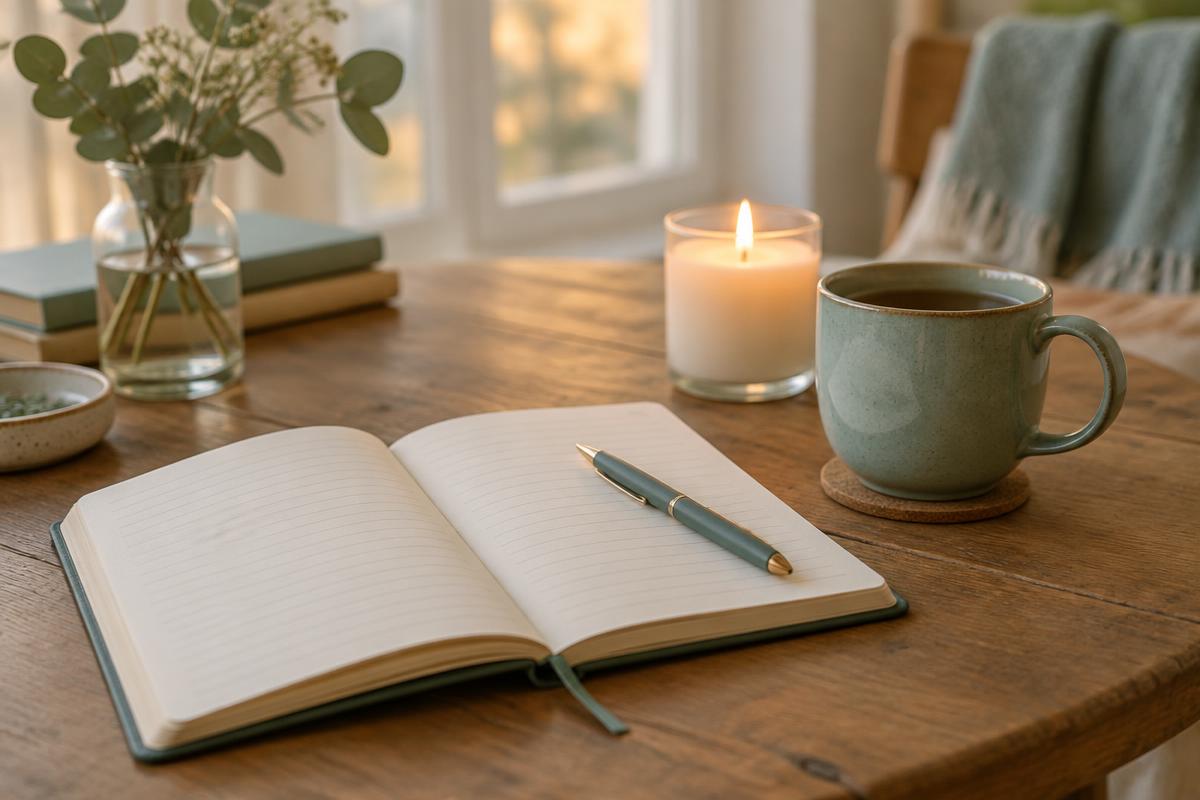
A 30-minute evening unwind routine
- 1
Switch off screens and dim the lights about half an hour before bed.
- 2
Do five minutes of gentle stretching: shoulder rolls, a neck tilt and a seated twist.
- 3
Have a warm, caffeine-free drink, such as herbal tea, sitting somewhere comfortable.
- 4
Write tomorrow's tasks in a notebook, then add one thing that went well today.
- 5
Sit or lie down and breathe in slowly through your nose and out for longer through your mouth, for about five minutes.
- 6
Go to bed when you feel sleepy.
Why does an evening routine help?
A repeated routine tells your body the day is ending. The NHS suggests going to bed and waking at similar times, and winding down without screens beforehand.
What should you avoid in the evening?
The NHS advises avoiding caffeine, alcohol and smoking in the hours before bed, and avoiding a heavy meal late at night. Vigorous exercise close to bedtime can also keep you alert.
How do you put it together?
Use the step-by-step list near the top of this page, adjusting the timings to your evening. The point is the pattern, not perfection. For more ideas, see relaxation techniques for better sleep.
What might a routine look like if you are very busy?
Even ten minutes helps. Put your phone on charge outside the bedroom, do two minutes of stretching, write tomorrow's tasks on one page, and do five minutes of slow breathing in bed. Keep it the same each night so it becomes automatic.
How do you make the habit stick?
Link it to something you already do, such as brushing your teeth. Keep it small enough to do on your worst day. Missing a night does not matter, you just start again the next evening.
What common mistakes should you avoid?
Making the routine too long, scrolling on your phone as part of it, or expecting instant results. Give it a couple of weeks. If you still have trouble sleeping, speak to your GP.
How long will it take to notice a difference?
Some people feel more settled within a few nights, others after a couple of weeks. The more regular you are, the better it tends to work. See also our guide to relaxation techniques for better sleep.
What if you have little time?
Five minutes of slow breathing and a to-do list is still worth doing. You can also combine the routine with sophrology exercises.
Common questions
How long before bed should I stop using my phone?
NHS Every Mind Matters suggests winding down without screens for about an hour, if you can manage it. Even a shorter break helps.
Is herbal tea really better than ordinary tea?
Ordinary tea and coffee contain caffeine, which can keep you awake, so caffeine-free herbal options are a better choice in the evening.
What if I work late?
Build a short break between work and bed, such as a walk or the breathing exercise, so your body has time to shift down.