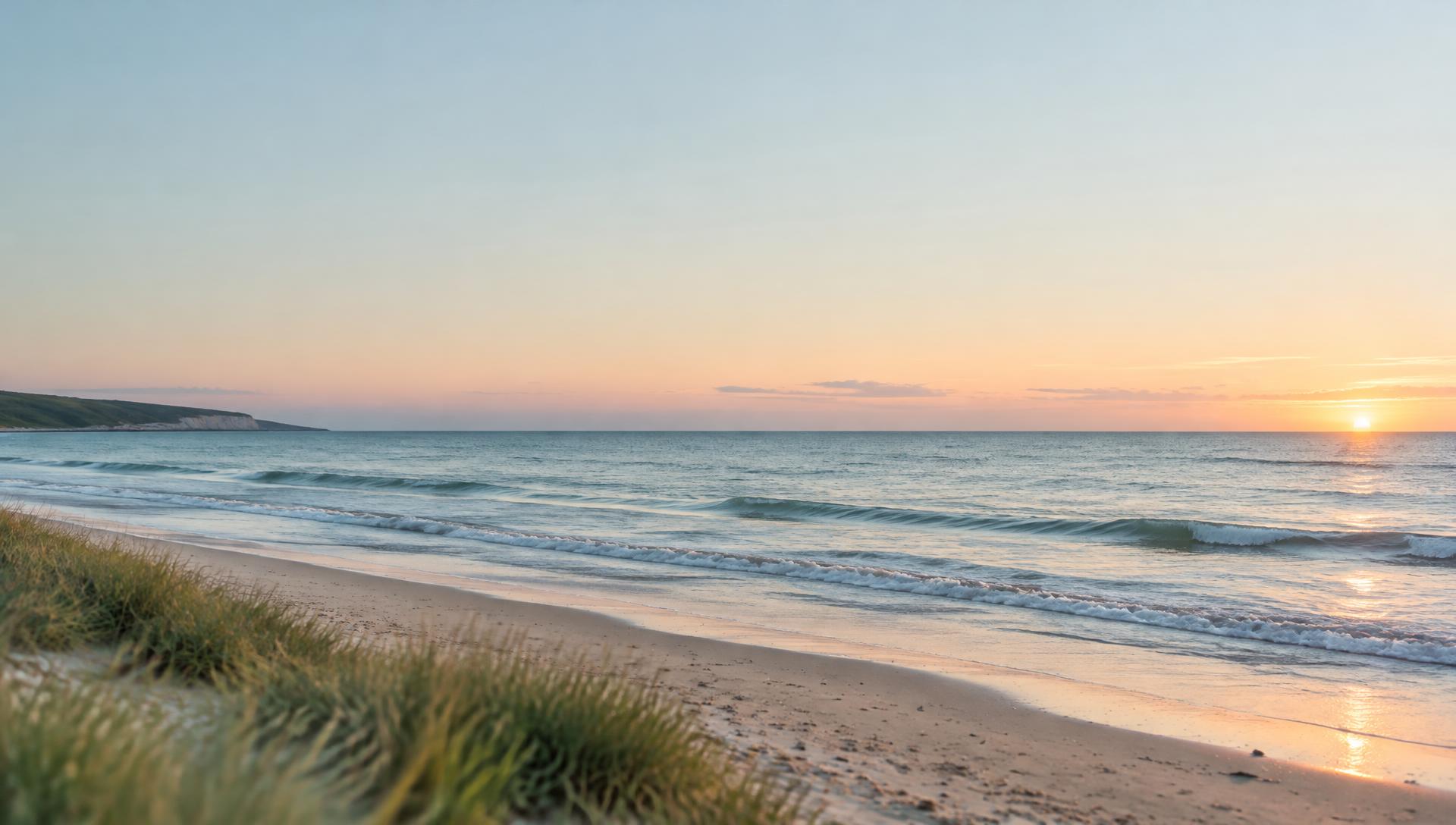
A five-minute guided visualisation
- 1
Sit or lie comfortably and take five slow breaths.
- 2
Picture somewhere calm. Start with what you can see: the colours, the light and the shapes.
- 3
Add sounds: waves, birdsong, leaves, quiet.
- 4
Add what you can feel: warmth on your skin, a gentle breeze, the ground beneath you.
- 5
Stay there for a few minutes, breathing slowly.
- 6
When you are ready, bring your attention back to the room, wriggle your fingers and toes, and open your eyes.
What is guided visualisation?
It is a relaxation technique where you imagine a peaceful scene, often with a voice or script guiding you. NHS relaxation scripts include it alongside breathing and body scans.
How do you choose a place?
Pick somewhere you feel calm: a beach, a woodland path, a warm room at home. It can be somewhere you have been or one you imagine.
How is it used in sophrology?
Sophrology usually finishes with a short visualisation after the breathing and gentle movement. Practitioners also use it to rehearse events, for example an exam or a birth.
What does a longer visualisation script sound like?
Imagine you are walking slowly along a quiet path towards the sea. The ground is soft under your feet, and the air is cool and clear. You can hear the waves ahead, rolling in and out. With each step, your shoulders drop a little more. You reach the shore and sit on warm sand. You watch the waves, and with each wave you breathe out. Stay here for as long as you like.
You can record yourself reading a script like this slowly, or ask a friend to read it, then listen with your eyes closed.
What other scenes can you use?
Beaches and woodland are popular, but any place that feels safe works: a favourite room, a garden, a mountain view or a childhood spot. Some people picture a colour or light slowly spreading through the body. Choose whatever feels easy and calm.
What if you find it hard to picture things?
Many people do not see clear pictures in their mind, and some do not see any. If that is you, work with other senses: the sound of rain, the smell of cut grass, the feel of a warm blanket. You can also describe the scene to yourself in words. It still works.
Can you use visualisation for sleep, nerves or big events?
Yes. Many people use a calm scene to wind down before sleep. Some practitioners also help people rehearse a situation, such as an interview or an exam, by picturing it going calmly. It is not a substitute for preparation, but it can help you feel settled.
What if you cannot picture things clearly?
That is common. Focus on other senses instead, such as the sound of waves or the feel of warm sun. You do not need a clear picture for it to help.
Common questions
How long should a visualisation last?
Five to ten minutes is plenty, though a minute can help in a pinch.
Do I need a recording?
No. Many people prefer to follow a recording at first. NHS services publish relaxation scripts and audio.
Is it the same as daydreaming?
It is similar, but deliberate: you choose a calm scene and stay with it while breathing slowly.