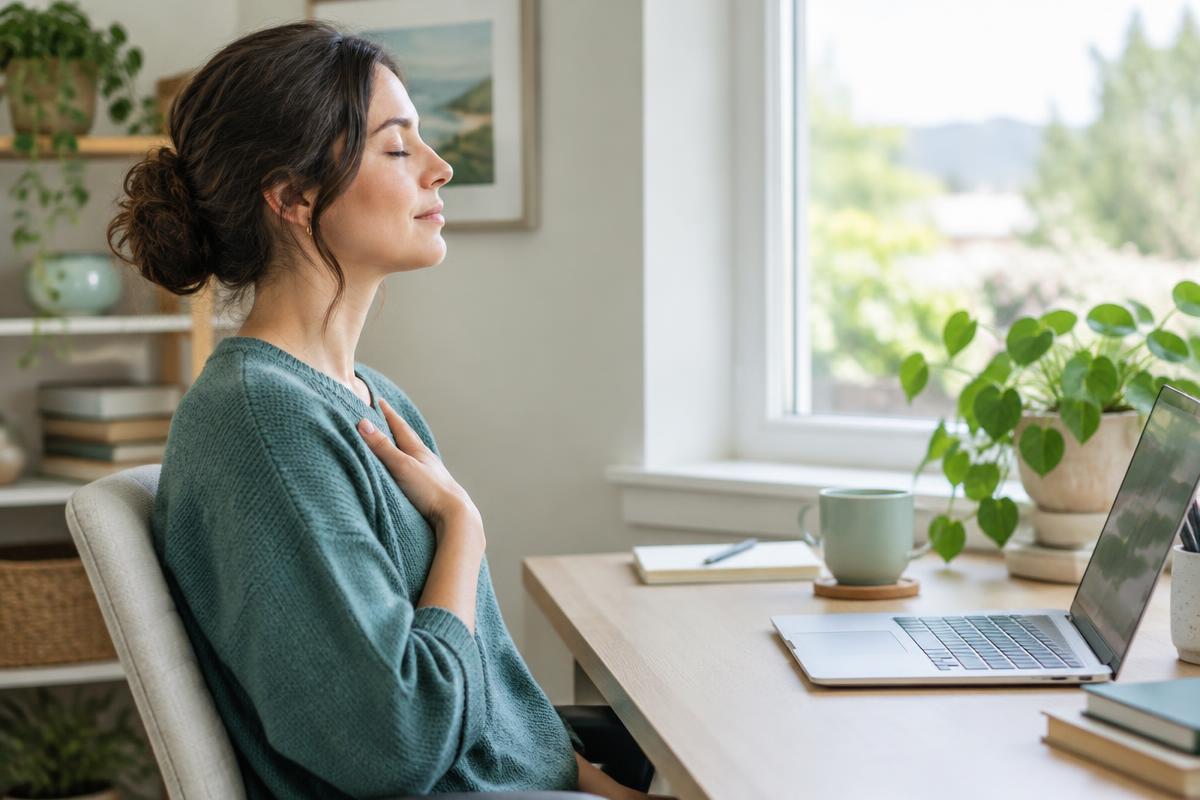
How does stress show up in the body?
The NHS lists physical signs of stress including headaches, muscle tension or pain, tiredness, sleep problems and stomach upsets. You may also notice a faster heartbeat or breathing, sweating or feeling on edge.
Why does stress affect the body?
When you feel under threat, your body prepares to cope: your heart and breathing speed up and your muscles tighten. This is useful in a real emergency, but it is tiring if it goes on and on.
Why does relaxing your body help your mind?
Mind and body feed back into each other. Slowing your breathing and letting go of muscle tension tells your body it is safe, and your mind often follows. This is why breathing, muscle relaxation and gentle movement are used to ease stress.
What can you do about it?
Start with one small habit: slow breathing, a short walk, or a body scan before bed. Methods such as sophrology combine several of these.
What is the difference between short-term and long-term stress?
Short bursts of stress, such as before a presentation, are normal and pass once the situation does. Stress that goes on for weeks or months, with little chance to recover, is harder on both mind and body, and is more likely to affect sleep, mood and physical health.
If you notice stress has become your normal state, that is a good reason to build in regular relaxation and to talk to someone.
How can you notice stress in your body earlier?
Check in a few times a day: are your shoulders raised, your jaw clenched, your hands tight or your breathing shallow? Naming it is the first step. A body scan trains this habit, and a minute of slow breathing is a good response.
What everyday habits help your body cope with stress?
Mind's advice on stress and wellbeing includes regular sleep, being active, time outdoors, eating regularly and keeping in touch with other people. None of these is a quick fix, but together they make it easier for your body to recover. See our sleep routines and ways to relax your mind and body.
What can talking therapies offer?
If stress is getting in the way of daily life, talking therapies can help you understand it and find ways to cope. In England you can refer yourself to NHS talking therapies, or ask your GP. Relaxation methods work well alongside this support.
When should you see a GP?
Physical symptoms can have causes other than stress. See your GP if symptoms are severe, new, getting worse or lasting, or if you have chest pain (call 999). If stress is affecting your daily life, the NHS advises getting help.
Common questions
Can stress cause physical symptoms?
Yes. It can cause muscle tension, headaches, tiredness, stomach upsets and sleep problems, among other things. Do not assume symptoms are stress, though. Get them checked if they worry you.
Where do people hold stress in the body?
Often the shoulders, neck, jaw and stomach, but it varies. A body scan can help you notice where you hold it.
Is the mind-body connection proven?
That stress affects the body, and that relaxation techniques can reduce tension, is widely accepted. How well any particular method works varies from person to person.