1. Slow your breathing
Breathe in gently for about four, and out for about six, a few times. Our guide to breathing exercises for stress has more.
2. Ground yourself in the room
Look around and name five things you can see, four things you can touch, three things you can hear. This pulls your attention away from racing thoughts and into the present.
3. Change your scene
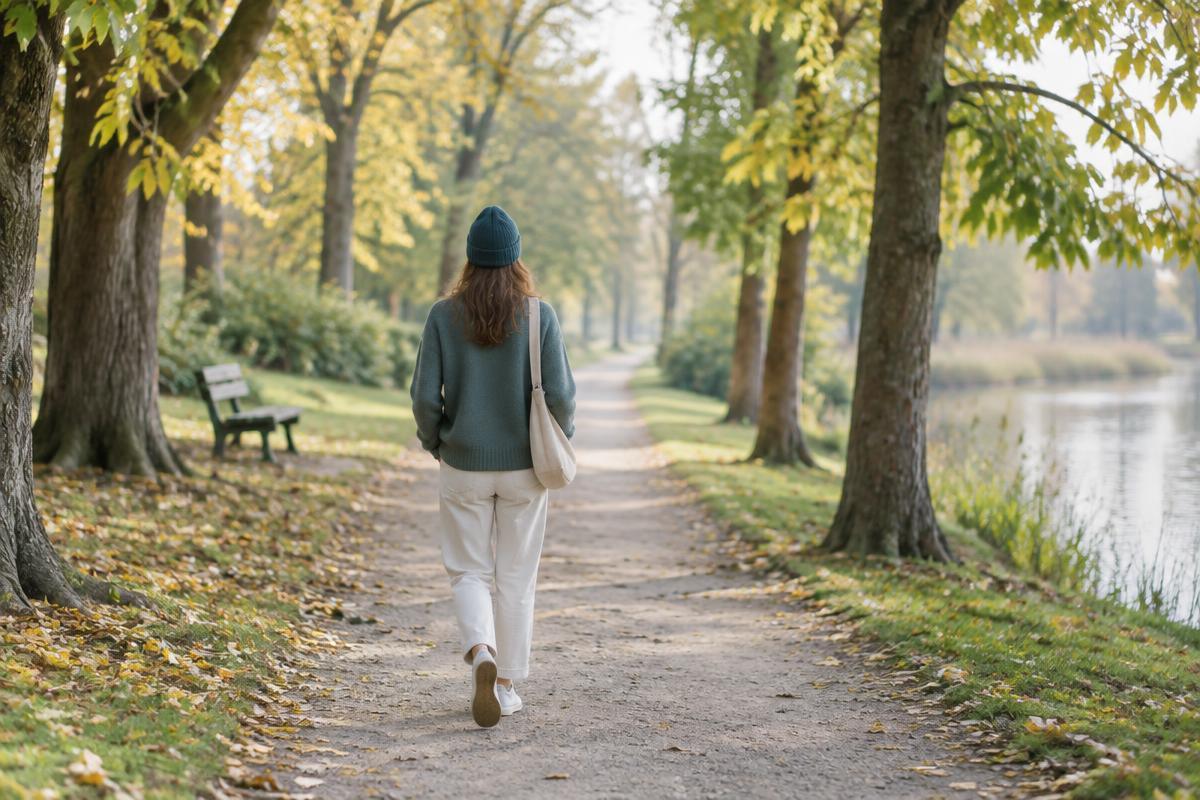
Mind suggests that a change of scene can help you relax and ease distress, even for a few minutes. Step outside, walk to another room or look out of a window.
4. Release your muscles
Press your feet into the floor, squeeze your hands into fists for a few seconds, then let go. A fuller version is in our progressive muscle relaxation guide.
5. Talk to someone
Tell someone you trust how you feel. The NHS lists talking to someone as a first step for stress and anxiety.
What is happening in your body when you feel overwhelmed?
When you feel under pressure, your body can respond by speeding up your heartbeat and breathing, tensing your muscles and making you feel on edge. This is a natural reaction and not a sign that something is wrong with you, but it can be frightening if you do not expect it.
The methods above work by sending your body the opposite signal: slower breathing, loosened muscles and a calmer focus.
What should you avoid when you are trying to calm down?
The NHS advises against using alcohol, cigarettes, gambling or drugs to cope with stress. They may feel like they help at the time, but they tend to make things harder later. Try one of the quick methods first, and talk to someone you trust.
How can you help someone else calm down?
Stay calm yourself, speak slowly and quietly, and ask what would help. Avoid telling them to calm down, which can make things worse. You can breathe slowly alongside them, suggest stepping outside, or sit with them until the feeling passes.
If they have chest pain, are struggling to breathe, or seem very unwell, call 999.
How can you prepare so it is easier next time?
Practise a method when you are calm, so you can use it when you are not. Try our breathing exercises for five minutes a day. Notice the early signs that stress is building, such as a tight jaw or shallow breathing, and respond early.
When should you get help?
If you have chest pain, call 999. If you often feel overwhelmed, or anxiety is affecting daily life, speak to your GP, and in England you can refer yourself to NHS talking therapies. If you feel you cannot cope or have thoughts of harming yourself, call Samaritans free on 116 123 at any time.
For longer-term ideas, read relaxation techniques for anxiety.
Common questions
How long does it take to calm down?
Many people feel a little calmer within a few minutes of slow breathing. A strong wave of anxiety usually rises and passes, and the exercises help you ride it out.
What is the 5-4-3-2-1 method?
It is a grounding exercise: name five things you see, four you feel, three you hear, two you smell and one you taste. It brings your attention back to the present.
Is this the same as treatment for panic attacks?
No. These are self-help ideas. If you have panic attacks, the NHS advises speaking to your GP.
Can I calm down quickly at night?
Yes. Slow your breathing, keep your eyes closed and move your attention slowly through your body. Our guide to stopping overthinking at night has more.